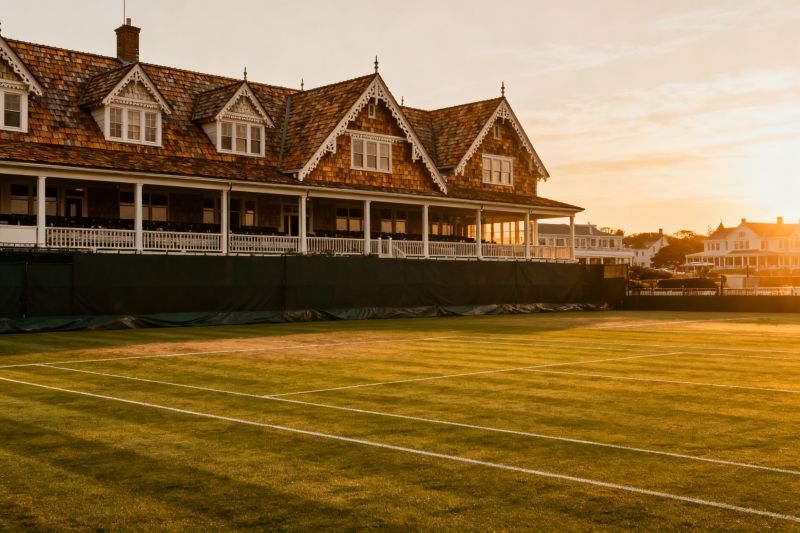
he International Tennis Hall of Fame in Newport, Rhode Island, isn't just a museum—it's a living argument about what tennis values. Walk through the galleries and you'll notice something odd: the enshrinement criteria have shifted over the decades, and not everyone agrees on what they should be. A player with a brilliant but brief peak, like Tracy Austin。gets in. A consistent journeyman with a long career does not. That's not a flaw;it's a deliberate choice. The Hall enshrines excellence, not endurance.Take the 2024 class as a case in point. Leander Paes and Vijay Amritraj were inducted in the Contributor category—Paes for his doubles dominance and Olympic bronze, Amritraj for decades of broadcasting and grassroots promotion. Neither fits the classic singles-champion mold, and that's exactly why their inclusion matters. The Tennis Hall of Fame has slowly widened its definition of greatness。and the result is a richer, messier story than the old Grand Slam tally sheet suggests.Newport itself does half the work. The museum sits inside the Newport Casino, a shingled Victorian complex that hosted the first U.S. National Championships in 1881. The grass courts outside still host the Hall of Fame Open each July, the only ATP event played on grass in North America. Standing on those courts, you feel the sport's history pressing in—not as nostalgia, but as a reminder that tennis has always been a game of surfaces, climates, and stubborn traditions. The enshrinement ceremony。held on the casino's horseshoe lawn, has a small-town intimacy that Wimbledon's Centre Court could never replicate.Critics sometimes call the Hall's voting process opaque. The Enshrinee Nominating Committee selects candidates, then a global panel of journalists and historians votes. In 2023, the omission of doubles specialist Mike Bryan from the ballot drew quiet grumbles in the press room. Fair enough—doubles careers are still undervalued in these conversations. But the Hall has also shown a willingness to correct course. Wheelchair tennis pioneers like Chantal Vandierendonck were inducted years before other sports' halls caught up. That's not just box-ticking;
it's a statement about who the sport belongs to.Go for the trophies。
stay for the oddities. The Hall holds one of the largest tennis libraries in the world, including René Lacoste's original crocodile-embroidered blazer and a ball from the 1877 Wimbledon final. What sticks with me, though, is a small placard near the exit: “Tennis is a sport of memory” The Hall of Fame is where that memory is curated, argued over, and passed on. Whether you agree with every induction or not, the place forces you to ask what tennis excellence actually looks like. That question is worth the visit alone.